

ArmInfo. In 2025, the number of orders for both export and import road transportation in Armenia increased, and prices rose significantly in line with demand. This was reported to ArmInfo by the international freight exchange ATI.SU.
Specifically, in 2025, the number of orders posted on the freight exchange for transportation to Armenia from other countries increased by 23.5%, following an 8% decline last year. Steady growth was observed in all four quarters. Rates in dollars increased by 15%.
According to the source, Russia largely drove this trend - the number of orders on this route increased by 18%. Demand for transportation from Belarus, Kazakhstan, Uzbekistan, and China also increased. After a significant decline in 2024 (down 22%), demand for export shipments recovered less steadily, with the number of applications increasing by 6%. This trend varied throughout the year. A significant year-on-year decline was recorded in the first quarter (down 31%), followed by a negative trend in the second quarter (down 3%), and growth in the third and fourth quarters (up 28% and 11%, respectively, compared to the same periods in 2024).
Russia traditionally leads in the number of export shipment applications (up 6%), with demand for shipments to Belarus and Kazakhstan also increasing slightly. Export rates increased throughout the year, increasing by an average of 20% compared to 2024.
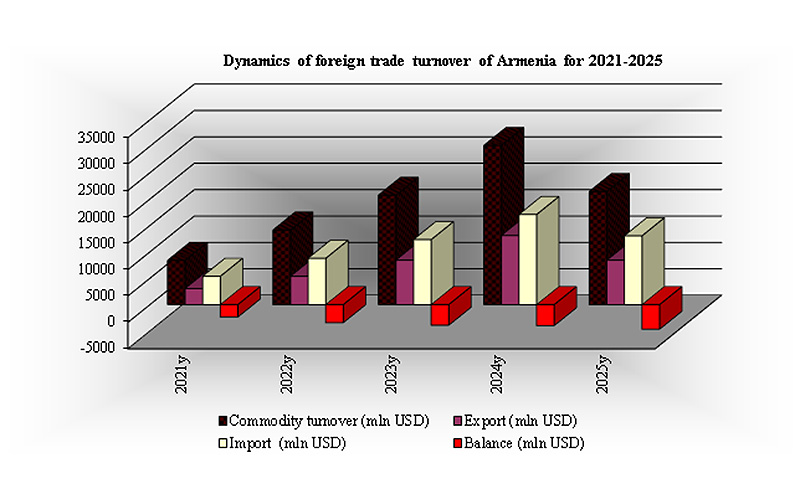
The positive trends noted by ATI.SU are confirmed by official statistics. According to the Statistics Committee, in the first 11 months of 2025, road freight volume increased by 0.9%, following a 5.3% decline in 2024. Imports grew by 7.4%, while exports declined by 12.3%. Domestic freight volumes declined by 1% (compared to a 12.8% decline in 2024). The market is gradually recovering.
The recovery of freight volumes in Armenia was primarily facilitated by the stabilization of foreign economic activity and the growing demand for international transportation. Against this backdrop, the government has focused primarily on developing road infrastructure, investing in the construction and modernization of highways, which creates the fundamental conditions for the industry to function. International financial institutions, including the EBRD and the EDB, are also participating in infrastructure projects. However, the impact of these investments is long-term and does not have an immediate effect on freight volumes. "An additional area of development is the digitalization of the transport industry, including the implementation of the e-CMR electronic consignment note. Under current conditions, this tool improves the convenience and efficiency of document flow rather than significantly impacting freight volumes, so it can be considered a factor for future growth," noted Sergey Mkrtchyan, Director of the Armenian Representative Office of the international freight exchange ATI.SU.