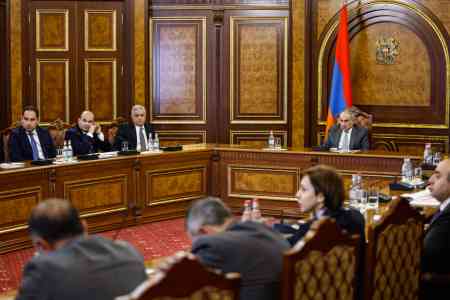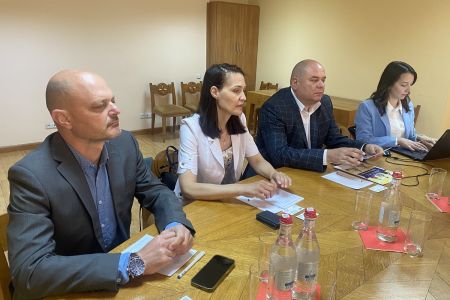



ArmInfo. In the coming years, it is important for Armenia to advance infrastructure projects, stimulate the digitalization of processes at the borders and within the country, and restructure its approach to personnel training. This was stated by Sergey Mkrtchyan, Director of the Armenian Representative Office of the international logistics platform ATI.SU, during the Logistics Development in Armenia conference held in Yerevan.
"Without this, new routes and agreements will remain on paper, and logistics will not be able to become a sustainable support for exports and the domestic market," he emphasized.
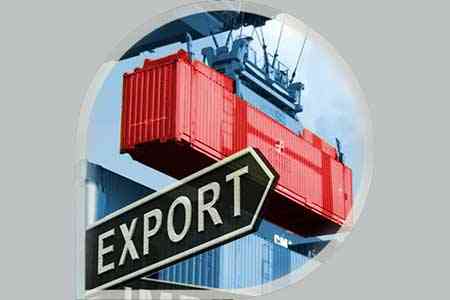
Mkrtchyan emphasized that for a landlocked country, access to foreign markets is always a pressing issue. Armenia, however, relies on transit through neighboring states, and several initiatives could currently change the route configuration.
In this regard, the head of the Platform noted that Armenian companies have the opportunity to connect to international supply chains. In particular, he pointed to the Middle Corridor project, a network of railways, ports, and multimodal routes connecting China and Central Asia with Europe via the Caspian Sea, the South Caucasus, and Turkey, bypassing Russia. Citing EU estimates, Mkrtchyan noted that cargo flows along this route have increased severalfold since 2022 and could increase exponentially by 2030.
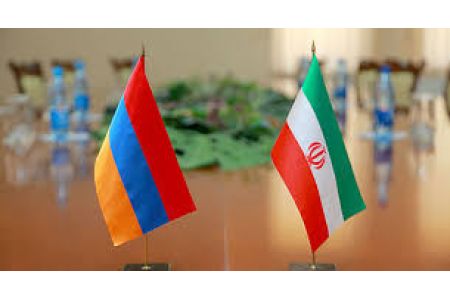
He also cited the development of ties with Iran as a separate area. According to Mkrtchyan, this is the only land artery that allows Armenia to access Iranian ports southward and further to the markets of the Persian Gulf and India. "Last year, Armenia and Iran agreed to build a new bridge at the Norduz border crossing, reconstruct the existing bridge, and modernize border terminals," he noted.
At the same time, as the ATI.SU director continued, a new cargo clearance infrastructure is being developed within the country. With the support of the EBRD and the EU, a customs and logistics center is being created, which should replace several disparate sites, reduce the time required for procedures, and implement the "single window" principle. "This is a prerequisite for the development of external corridors: new routes are of little use if cargo is delayed due to internal infrastructure," Mkrtchyan emphasized.
Touching on logistics and the labor market, he noted that the logistics industry in many countries is facing a labor shortage, and the Armenian economy is in a similar situation.
"Authorities have been noting a general labor shortage for several years now: the number of vacancies in construction, manufacturing, IT, and transportation is growing, while the labor supply is not keeping pace with economic recovery and growth," said the head of ATI.SU.
In terms of process digitalization, he noted, Armenia's logistics sector is already at a comparatively high level. He noted that digital solutions have become the norm: electronic waybills, online customs services, digital product labeling, and real-time data exchange systems.
Mkrtchyan noted that the EAEU plans to conduct a pilot project in 2026 to introduce electronic waybills for international road transport. "By the end of 2026, the Union countries plan to transition to the full-scale use of the EAEU integrated information system." There are also challenges to simplify transit, implement digital cargo accounting tools, and harmonize procedures," he said.
The head of the Platform noted that digital initiatives in Armenia are also linked to the regulation of foreign trade operations. Specifically, mandatory digital labeling has been introduced for several categories of goods during export and import: beverages, certain agricultural products, petroleum products, medicines, cosmetics, and others.
Summing up, Mkrtchyan emphasized that without stable transport links with Georgia, Iran, Azerbaijan, Turkey, and further afield with Europe and Central Asia, logistics remains a local service.
"Digitalization makes it possible to make these links operational. The compatibility of systems and the pace of implementation of digital solutions directly impact competitiveness. Automation, electronic document management, and management systems reduce the workload on people, freeing them from routine operations. This helps alleviate the labor shortage," he emphasized. It should be noted that during the conference, which was attended by business representatives and experts, issues related to the development of regional communications, labor shortages, and the digitalization of processes were discussed. Particular attention was paid to steps that will enable Armenia's logistics sector to reach a new level.
According to the RA Statistics Committee, freight transportation volumes in Armenia in the first quarter of 2026 decreased by 1.6% compared to the same period in 2025 (versus a 0.7% increase a year ago), reaching 3,408,500 tons. This decline was driven by a 10.7% decline in the dominant road freight transport mode, which reached 2,185,900 tons.
At the same time, rail freight transportation increased by 34.8% to 470,300 tons, while air freight grew by 27.4% to 12,100 tons. The main pipeline delivered 740.2 thousand tons of natural gas, with an annual increase of 13%.